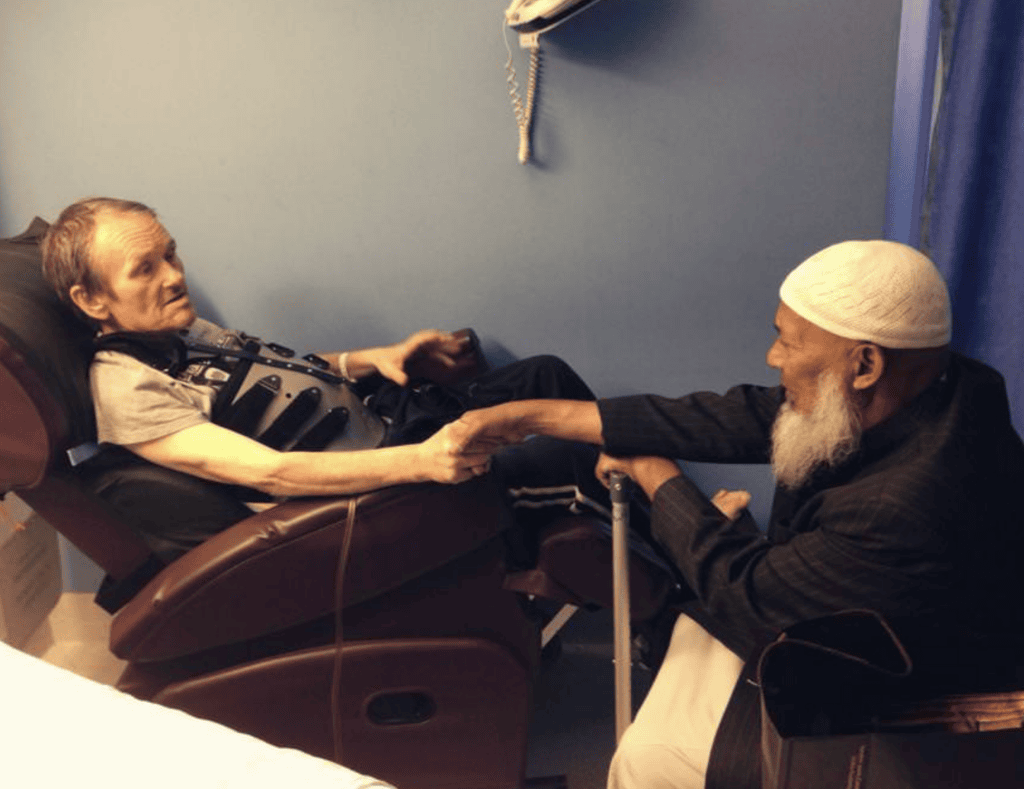
A Muslim Patient Visitation Program
At MCC, we understand that being in the hospital can be a challenging experience for both patients and their loved ones. Our Hospital Visits Program is dedicated to providing emotional, spiritual, and pastoral support to community members during times of illness or recovery. We are here for phone calls and visitation for sick and shut-in Muslims in the San Francisco Bay Area. MCC covers the East Bay region (Alameda County, Contra Costa County) as well as San Francisco County, while our partner at WVMA covers the South Bay region.
Our Mission: Spiritual Care
We strive to bring comfort, hope, and companionship to those who are hospitalized by offering prayers, emotional support, and a listening ear. Our volunteers are available to visit patients, provide religious counsel, and assist families in need.
The Prophet (PBUH) said: “When you visit a sick person, ask him to pray for you, since a sick person’s prayer is like that of angels.”
What We Offer
Patient Visits & Spiritual Support – Our trained volunteers and religious leaders provide encouragement and prayers for healing.
Dua & Supplication – We offer Islamic prayers for patients and their families, seeking comfort and strength through faith.
Family Support & Counseling – Helping loved ones navigate difficult times with guidance and reassurance.
Assistance with Religious Needs – Support with performing prayers, reading the Quran, and providing other religious resources, like end-of-life care.
Join Our Compassionate Volunteer Team
Revive the Prophetic tradition of visiting the sick! If you have a passion for helping others and wish to offer companionship and spiritual support to those in need, consider joining MCC’s Compassionate Hospital Visits Team. Your presence can bring hope and comfort to someone’s healing journey.
All volunteers receive training on how to assess patients’ religious and spiritual needs, protect their privacy, identify topics to raise, and read the Dua or the Qur’an.
Let’s come together as a community to support one another in times of need.
Our goal at MCC East Bay is to meet the needs of members who are sick and are unable to attend regular mosque services. Imams and volunteers of the masjid shall visit sick, shut-in, and homebound members.
Anyone needing encouragement, comfort, or a sense of belonging would benefit from a visit. While that could include everyone, certain community members especially need to be reminded that they are not forgotten. These are people who can feel rather lonely at times, especially: elderly people still living independently, especially if they are shut-ins; elderly or disabled people living in nursing homes; people who are sick for a prolonged period of time; people who are hospitalized; bereaved people; prisoners; people in shelters; people in crisis; and, anyone who needs end-of-life prayers.
Questions? operations@mcceastbay.org
Visiting The Sick
Visiting the sick is the right of a Muslim over his fellow Muslim. It strengthens brotherhood and helps reduce the psychological pain of the sick. As well as being socially isolating, having no visitor to help with the “small” things, such as cutting up food or refilling a water glass, can delay a patient’s recovery.
Not only is visiting the sick a highly recommended act, according to some of the scholars, it is a farḍ kifāyah (a communal obligation; if enough individuals discharge the obligation, the remaining Muslims are freed from the responsibility).
When visiting the sick, ensure you are not burdening the patient or visiting at an inappropriate time. Try to raise their spirits and remind them of how being sick helps to wipe away one’s sins and increase one’s ranks in the sight of Allah (subḥānahū wa ta‘ālā).
‘The stupidity of those visiting the sick is worse than the sickness itself; they come at an inappropriate time, and they sit for far too long!’ – Sufyān al-Thawrī
70,000 Angels Will Pray for You + A Mansion in Paradise
The reward of visiting the sick is immense. The Messenger of Allah ﷺ said: “When a Muslim visits a sick Muslim in the morning, 70,000 angels constantly pray for him till the evening. If he visits him in the evening, 70,000 angels constantly pray for him till the morning, and he will have (his share of) reaped fruits in Paradise.” (Tirmidhī)
In another ḥadīth, he said: “Whosoever visits a sick person or visits his brother for the sake of Allah, a heavenly caller calls out: ‘You have done well; your walking is good and blessed, and you have built a mansion in Paradise!’” (Tirmidhī)
In his commentary on Saḥīh Muslim, Imām al-Nawawī notes that visiting the sick is not limited to those one knows; rather, one ought to visit those one knows, and those one doesn’t.
Great Rewards for Visiting the Sick
There are great rewards awaiting those who visit the sick, as mentioned by the Prophet (pbuh): “A Muslim visiting his sick brother (or sister) will continue to be in the harvest of paradise until he or she returns home.”
And God’s Messenger of Mercy, Mohammad, also said: “A visitor walking to visit a sick person will be wading in the mercy of God. When the visitor sits with the sick one, they will be immersed in mercy until his or her return.”
What is Muslim Chaplaincy?
Muslim chaplaincy services provide specialized spiritual and emotional support tailored to Islamic beliefs for patients, families, and staff in healthcare settings. Chaplains offer compassionate listening, facilitate essential Islamic rituals (such as the five daily prayers and ablution), read the Quran, and provide guidance during difficult medical or end-of-life decisions. [1, 2, 3]
Core Services & Support
Spiritual Comfort & Dua: Offering sincere prayers (duas) for healing, bringing copies of the Quran, and providing a quiet listening space. [1, 2, 3]
Ritual Accommodations: Assisting patients with finding the Qibla (direction of Mecca), organizing prayer rugs, and offering guidance on Wudu (ablution) or dry ablution (Tayammum). [1]
End-of-Life Care: Assisting patients and families in their final moments, which includes reciting Surah Yasin and ensuring the patient is positioned towards Mecca if possible. [1]
Patient Advocacy: Helping medical teams and families navigate ethical decisions in healthcare from a culturally and religiously sensitive Islamic perspective. [1]